
English| EUR
Suggested for you
More currencies
Choose a language
Sri Lanka's reefs rarely sit far offshore, which is why so much of the country's snorkeling begins with a walk into the water rather than a boat charter. This Sri Lanka Snorkeling From The Beach guide maps which shorelines reward shore entry, what lives on each reef, and the conditions that decide whether a morning is worth the swim.
Quick answer
Shore snorkeling works best between 06:00 and 10:00, when the water sits calmest and the sun is still low. Reefs at Hikkaduwa, Unawatuna, Polhena and Nilaveli can be entered on foot; Pigeon Island National Park, the richest of them, opens 06:00–18:00 daily and charges 13,000 LKR per foreign visitor, with a short boat hop from Nilaveli.
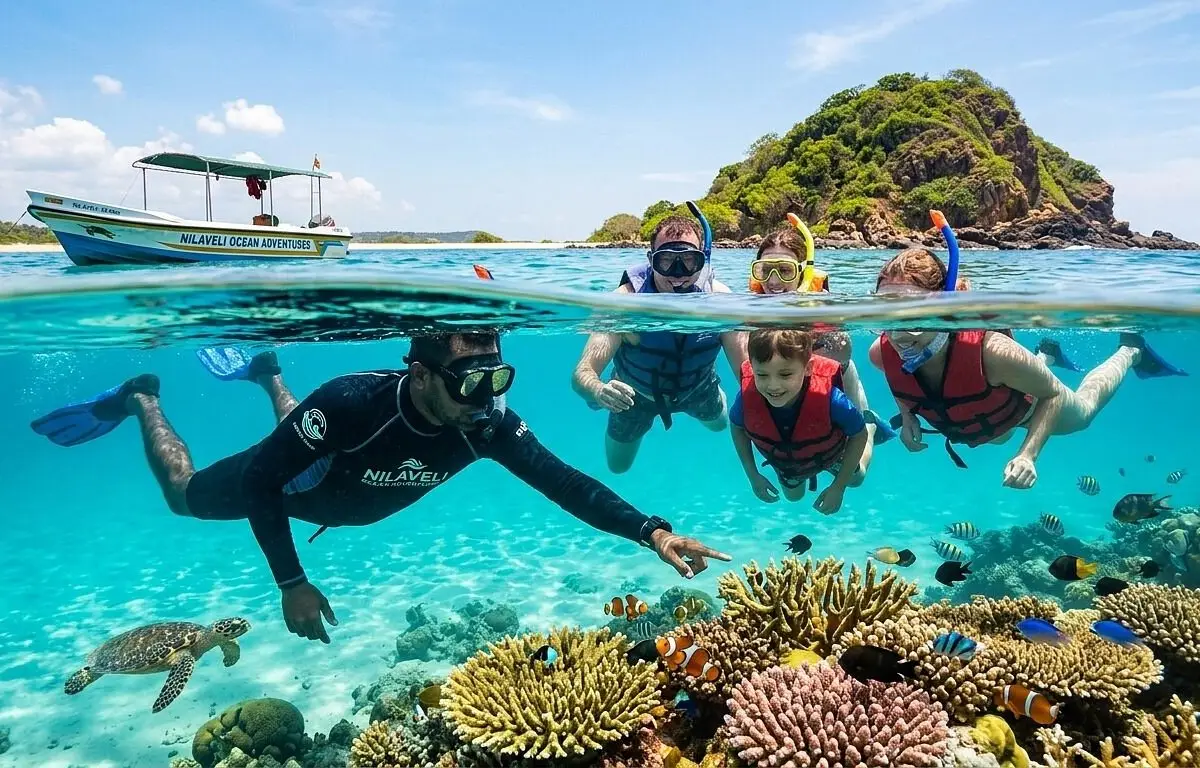
Sri Lanka protects only two marine national parks, and both of them sit within sight of a public beach. Hikkaduwa shelters a fringing reef on the south-west coast; Pigeon Island, known in Sinhala as Parevi Duwa, lies roughly a kilometre off Nilaveli in Trincomalee. That closeness is the whole premise of Sri Lanka snorkeling from the beach — the coral grows on shallow reef flats that begin in knee-deep water and fall away to three or four metres within a dozen fin kicks. The island's reef is the headline, but it is not the only one. Polhena, outside Matara, is enclosed by a natural rock barrier that creates a lagoon calm enough to stand in, which is why swimmers with little open-water experience usually start there. Unawatuna and Mirissa offer rockier entries and patchier coral. On the east coast, Uppuveli and Passikudah run long, shallow sandy shelves. The practical division is monsoonal: the south and west settle while the east is churned, and then the pattern reverses, so the coast a visitor chooses matters more than the month. What the water holds is specific rather than generic. Staghorn and table coral dominate the shallows around Pigeon Island, where blacktip reef sharks cruise the sand channels and hawksbill turtles graze. Off Polhena and Hikkaduwa, green turtles feed on seagrass close enough to shore that swimmers meet them in two metres of water. Parrotfish, moray eels and schooling fusiliers are routine sightings. Bleaching events in 1998 and 2016 thinned sections of reef, and regrowth remains patchy, so stands of living coral alternate with rubble — floating rather than standing is what keeps the difference from widening. Nilaveli reef snorkeling carries one structural caveat: the park's coral lies on and around the island itself, and a short licensed boat crossing from the shore is the only lawful way to reach it, with staff checking permits at the landing. Everywhere else along the coast, access is a matter of walking in past the fishing boats. The sensible approach treats beach snorkeling in Sri Lanka as a set of distinct reefs rather than a single destination, and a workable Sri Lanka snorkeling from the beach plan shortlists two or three sites, then lets swell and visibility decide the order.
“The coral grows on shallow reef flats that begin in knee-deep water and fall away within a dozen fin kicks.”
The best time for snorkeling from the beach in Sri Lanka depends on the monsoon patterns affecting water clarity. Planning your daily excursions for the best arrival window of 06:00–10:00 ensures calmer water and avoids the strongest midday sun.
Dry season, 28°C–32°C
This period offers the best visibility for shore-based snorkeling in regions like Trincomalee. Calm seas during these months facilitate better access to reefs near the shoreline.
Dry season, 27°C–30°C
Coastal waters remain clear and tranquil, ideal for beach-entry snorkeling activities. Conditions are optimal for viewing marine life in shallow reef areas.
—
The best arrival window is 06:00–10:00. Early arrival avoids stronger midday sun and provides calmer water conditions.
Verdict: For the best experience, target the East Coast between May and September, arriving daily within the 06:00–10:00 window.
Pigeon Island National Park is open to visitors daily throughout the week. Access is available from early morning until the early evening.
Pigeon Island National Park is located off the coast of Nilaveli, near Trincomalee. Access to the snorkeling sites requires a short boat transfer from the Nilaveli beach area.
Route 793/1 (Trincomalee to Nilaveli)
A6 highway to Trincomalee, then Nilaveli Road
Local boat operator from Nilaveli Beach to Pigeon Island
Plan your travel to ensure a best arrival window of 06:00–10:00. Arriving during this period avoids stronger midday sun and provides calmer water conditions for snorkeling.
Prepare these essentials before heading to Sri Lanka's beaches for snorkeling.
Everything you need to know about sri lanka snorkeling from the beach
Pigeon Island is one of the premier locations for sri lanka snorkeling from the beach, offering shallow reefs accessible by boat from Nilaveli. While the island itself is a short distance offshore, it remains the primary destination for those seeking accessible coral environments. Visitors often find that the clear, calm waters provide excellent visibility for observing marine life.
The best arrival window for snorkeling is 06:00–10:00, as early conditions provide calmer water and protect against the strongest sun. This timing is ideal for those planning their sri lanka snorkeling from the beach excursion. Local conditions can change rapidly in the afternoon, making early starts essential for safety.
Yes, the entrance fee is 13,000 LKR per foreign visitor for Pigeon Island National Park. This fee supports the conservation of the coral reefs and protected marine habitat. Always carry local currency to manage these costs effectively.
Access to the national park requires a short boat transfer from the Nilaveli beach area. You can find local boat operators stationed along the coast to transport you to the island. Plan your departure early to ensure you make the most of the site before the midday heat.
Many spots offer calm, shallow conditions that make sri lanka snorkeling from the beach a viable family activity when safety guidelines are followed. Supervised swimming and the use of life vests are highly recommended for younger or less experienced swimmers. Always check local water conditions with boat operators before heading out.
Pack high-SPF sunscreen, polarized sunglasses, and a reusable water bottle to stay hydrated during your outing. Essential gear such as a mask and snorkel can often be rented locally, but bringing your own ensures a proper fit. Remember to respect the marine ecosystem by avoiding contact with corals.
Snorkeling the South Coast
Read more Tickets & toursPigeon Island Snorkeling
Read more GuideSnorkeling with Turtles in Sri Lanka
Read more Tickets & toursMirissa Snorkeling Experiences
Read more Tickets & toursTrincomalee Snorkeling Tours
Read more GuideHikkaduwa Snorkeling Guide
Read more GuideSri Lanka Snorkeling Map
Read more