
3 hr
Pigeon Island: Blacktip Shark & Turtle Snorkel Tour
Boat out to Pigeon Island National Park and snorkel with sharks, turtles, and coral reefs.
Reserve
Hand-picked by our editors — only the best 5 experiences from 12 reviewed.
Verified partners for every tour, free cancellation where available, and instant confirmation on every booking.
3 hr
Boat out to Pigeon Island National Park and snorkel with sharks, turtles, and coral reefs.
Reserve
4 hr
Boat out to Trincomalee's famed marine park to snorkel with turtles, reef sharks, and vivid coral.
Reserve
7 hr
Chase blue whales and dolphins at sea, then snorkel coral reefs with turtles and reef sharks.
ReservePrices from verified partners. Availability updates in real time at checkout. Free cancellation policies apply where shown.
The landmarks, rooms, and views travelers on this tour remember — all visible on a single visit.
Features extensive coral formations with high biodiversity for snorkeling sri lanka pigeon island.
A protected area ideal for beginner snorkeling sri lanka pigeon island sessions.
Pigeon Island offers a protected, reef-focused marine sanctuary, whereas Swami Rock provides accessible, shore-based exploration of underwater ruins; most visitors find the island the more rewarding experience for wildlife enthusiasts.
| Feature | Top pick Pigeon Island | Swami Rock |
|---|---|---|
Biodiversity |
High coral density | Low reef coverage |
Conservation Fees |
25 USD plus VAT | None |
Boat Access Required |
Yes | No |
Crowd Levels |
Moderate to high | Low to moderate |
Snorkeling Skill Level |
Beginner to advanced | Intermediate due to currents |
Marine Life Variety |
Reef sharks and turtles | Small fish and rays |
| See tickets → |
Verdict: Securing snorkeling sri lanka pigeon island tickets is recommended for those prioritizing marine diversity, while Swami Rock remains a convenient alternative for those seeking informal snorkeling sri lanka pigeon island tours near the coast with a casual snorkeling sri lanka pigeon island tour pace.
Choose your ticket, select your date, and reserve in under two minutes. Secure checkout handled by our verified partner.
Instant confirmation by email, with a mobile voucher you can save offline. No printing, no queuing at a collection desk.
Arrive at the entrance, show your voucher on your phone, and walk in. Most tickets include priority or skip-the-line access.
Practical details for your visit straight from our verified partners — hours, access, rules, and how to get there.
Nilaveli, Trincomalee
Main departure point for boat operators
Direct transfer from Trincomalee town takes about 30 minutes to reach Nilaveli.
Wear swimwear suitable for water activities and bring a change of clothes. Covering shoulders and knees is recommended when traveling through local villages near the boat launch points.
Keep all belongings in a waterproof bag as boat transfers can involve splashes. There are no lockers on the island, so avoid bringing valuables.
Underwater cameras or GoPro devices are ideal for capturing marine life. Please ensure all gear is secured to prevent accidental dropping onto coral reefs.
The island is accessed via small boats, which may be difficult for individuals with limited mobility. There are no paved paths or facilities on the island itself.
The shallow waters are often suitable for children, provided they are strong swimmers and wear life jackets. Supervision is mandatory at all times due to the natural marine environment.
No food or drink vendors operate on Pigeon Island National Park. You must carry sufficient water and snacks, and strictly pack out all trash.
Best time to go, insider tips, nearby landmarks, and the cancellation fine print — flip through to skim what matters to you.
How crowds, weather, and events shift across the year.
The driest months provide the clearest water for snorkeling sri lanka pigeon island. Calm seas during this period make boat access easier and safer.
Small details that turn a good visit into a great one.
Use the 06:00–11:00 arrival window for the best water clarity and to avoid the midday sun.
Always listen to your boat captain regarding sea conditions and current safety protocols.
Non-bookable sights within a short walk — free to visit, easy to pair.
A long stretch of white sand perfect for relaxation before or after your snorkeling sri lanka pigeon island tour.
Flexible, no hidden fees.
Full refunds are typically available for cancellations made at least 24 hours in advance. The 25 USD conservation fee per foreign adult, excluding 18% VAT, is generally non-refundable if the permit has been processed.
Hand-picked options within walking distance — pick a district for vibe, or a specific hotel for convenience.
Located near the boat departure points for snorkeling sri lanka pigeon island excursions.
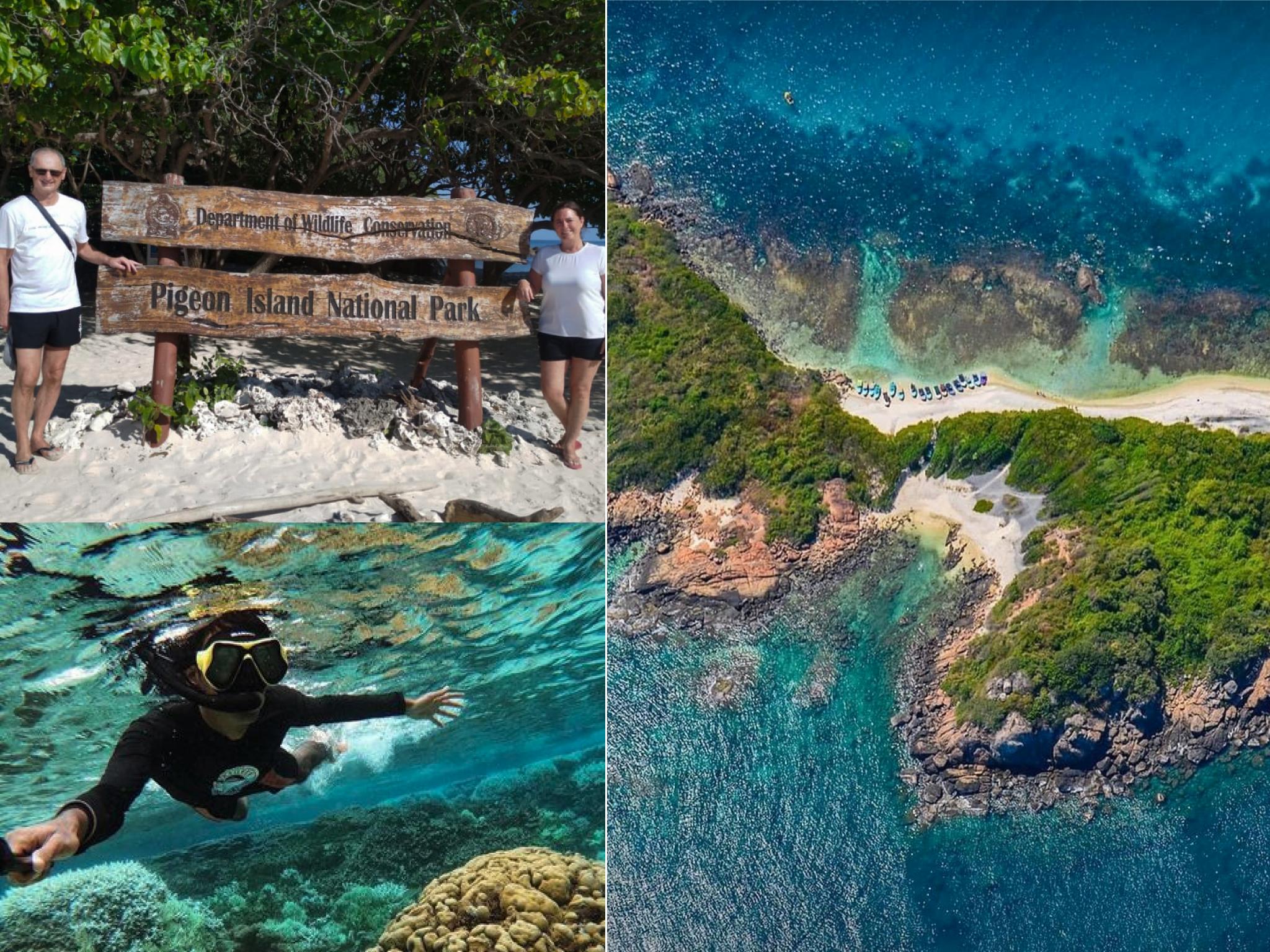
Pigeon Island National Park spans just 471 hectares off Trincomalee's northeastern coast, yet it harbors one of Sri Lanka's last intact coral reef ecosystems — a living laboratory of 300 coral species and 100 reef fish varieties documented since the sanctuary's 2003 designation. The park takes its name from the rock pigeons that once nested in cliff crevices on the larger of its two islets, though the birds have largely vanished; what remains is a submarine terrain of staghorn and brain coral formations that withstood the 2004 tsunami and now regenerate at measurable rates under government protection. Snorkeling sri lanka pigeon island tours converge on a shallow reef plateau extending 200 meters offshore, where water clarity averages 15 meters between November and April and the thermocline holds at 27 degrees Celsius year-round. Blacktip reef sharks — Carcharhinus melanopterus, reaching 1.6 meters in length — patrol the drop-off in groups of three to five, their dorsal fins tracing the surface at dawn and dusk. Green and hawksbill turtles graze the seagrass beds on the eastern flank, their populations monitored by the Department of Wildlife Conservation through annual nesting surveys that count 40 to 60 females per season. The park's conservation fee structure, implemented in 2018, channels revenue directly into reef restoration and anti-trawling patrols that have reduced dynamite fishing incidents by 80 percent since enforcement intensified. The reef's architecture reflects centuries of geological and human pressure. Portuguese traders anchored here in the 16th century, followed by Dutch and British naval vessels that damaged shallow corals with drag chains. Modern threats include crown-of-thorns starfish outbreaks and bleaching events linked to El Niño cycles, though 2023 surveys recorded a 12 percent increase in live coral cover compared to 2020 baselines. Snorkeling expeditions from Nilaveli and Uppuveli beaches now operate under a visitor cap of 300 per day, enforced through timed entry slots that prevent overcrowding on the reef's most fragile sections. The park remains Sri Lanka's only marine national park where reef sharks, turtles, and intact coral assemblages coexist within a single protected zone accessible to day visitors.
"Pigeon Island's reef plateau regenerates at measurable rates, its coral cover climbing 12 percent between 2020 and 2023."
A step-by-step walkthrough of the visit — what you'll see, how long each stage takes, and the details that matter.
You wade from Nilaveli's sand into water so transparent that the reef's contours appear within three strokes. The snorkel guide signals left, toward the park's designated entry channel, where the bottom drops from knee-deep shallows to a five-meter plateau in the span of 20 meters. Sergeant majors and parrotfish dart through staghorn thickets; you descend slowly, equalizing pressure, until a blacktip shark glides beneath you — close enough to see the white-tipped pectoral fins that gave the species its name. The reef's eastern slope is turtle territory. A green turtle the size of a kitchen table grazes on algae, unbothered by your presence, its shell mottled with barnacle colonies. You follow the guide's hand signals toward a coral head where a moray eel's head protrudes from a crevice, jaws rhythmically opening and closing to pump water over its gills. The current picks up near the reef's outer edge, where the plateau gives way to deeper blue water and larger pelagics — trevally and barracuda — orbit just beyond visibility range. After 40 minutes, the guide taps his watch and motions shoreward. You surface, fins heavy, saltwater stinging your eyes, the reef's architecture still vivid against closed eyelids.
The park is open daily from 06:00–18:00.
The conservation fee is 25 USD per foreign adult, excluding 18% VAT.
The best arrival window is 06:00–11:00 for optimal visibility.
Prohibited items include single-use plastics, alcohol, and drones.
Yes, families can visit, but children should be capable swimmers and wear life jackets.
No, there are no food vendors, so bring your own supplies.
You must take a local boat from Nilaveli Beach to reach the island.
No, there is no storage on the island, so keep your bags with you.
Yes, the shallow coral areas are often accessible for beginners with proper guidance.