
English| EUR
Suggested for you
More currencies
Choose a language
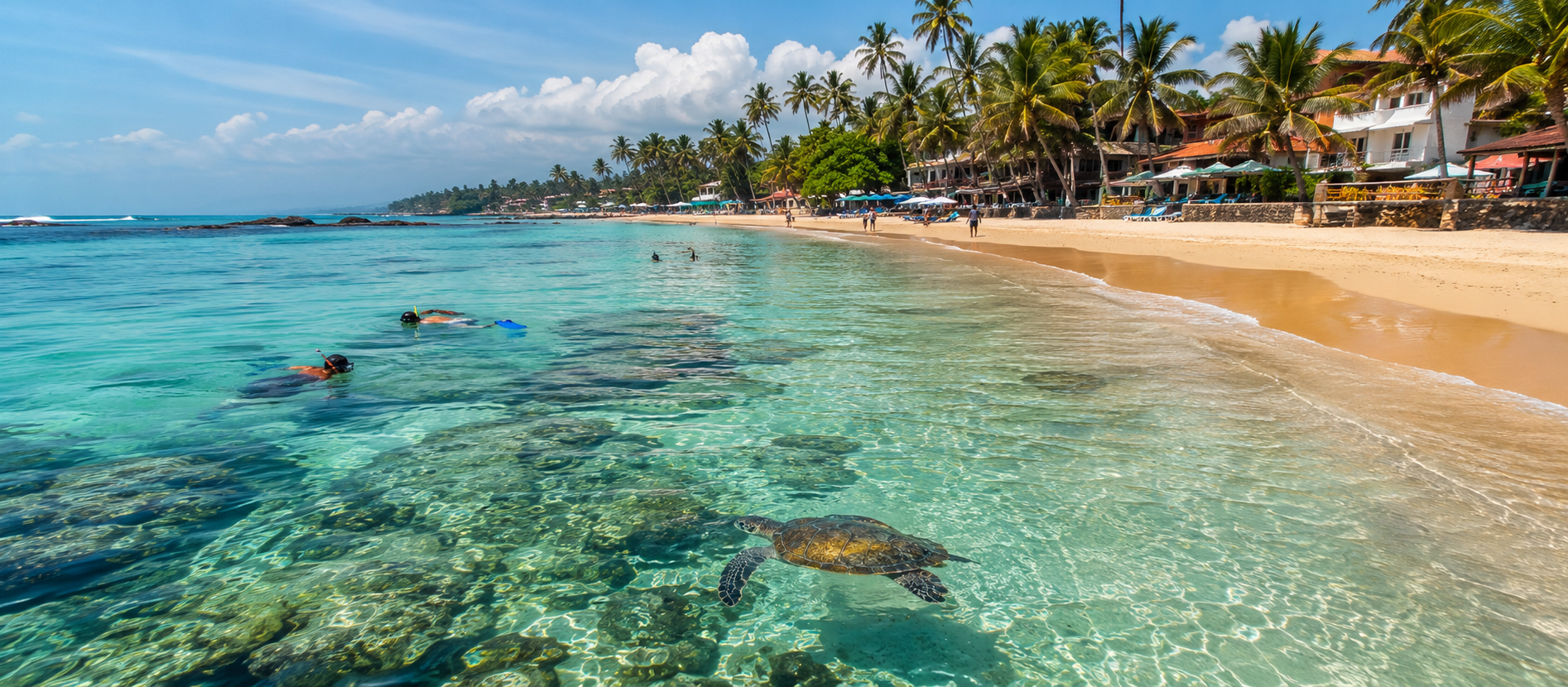
Hikkaduwa's reef lies close enough to the sand that swimmers reach the coral gardens without a boat, which is unusual for a marine national park. This Snorkeling Sri Lanka Hikkaduwa guide sets out the daily gate pattern, the conservation fee, the clearest-water window and the conditions that quietly spoil a session. It is written for readers deciding whether the swim earns a place in a south-coast itinerary.
Quick answer
Hikkaduwa National Park is open 07:00–18:30 every day, and the snorkelling starts in shallow coral gardens a short wade off Hikkaduwa Beach. A conservation fee of 380 LKR per person is paid at the park ticket office. Clarity is best between 07:00 and 10:00, before afternoon wind pushes chop and sediment across the reef.
Sri Lanka has only two marine national parks. One sits off Nilaveli in the east; the other is here, on the Galle coast. That is the backdrop to snorkeling Sri Lanka Hikkaduwa — a fringing reef designated a marine sanctuary in 1979, declared a national park in 2002, and shallow enough to enter from the beach. Known in Sinhala as Hikkaduwa Jathika Udyanaya, the protected zone begins a short wade from Narigama, and the inner lagoon rarely drops past chest depth at low tide. Green and hawksbill turtles graze those shallows most mornings, often within a few metres of swimmers. Expectations need calibrating. The 2004 tsunami and later bleaching events stripped much of the staghorn and table coral that made this reef famous in the 1980s. What has grown back is patchier, mixed with rubble and algae. Fish life, though, remains dense: parrotfish, sergeant majors, moray eels and schooling snapper work the same bommies the turtles do. Visibility is the variable that decides a session. Because the lagoon is shallow, wind, swell and rain runoff matter more than the calendar alone — the southwest monsoon unsettles this coast through the middle of the year, while the calmer stretch from late autumn into spring holds the cleanest water. Glass-bottom boats run from the beach for anyone who would rather look than swim. Practicalities are simple, which is part of the appeal. The conservation fee is settled at the park ticket office, and the gates keep the same pattern seven days a week; the hours and fees sections below carry the detail. Masks and fins rent from shops along Galle Road, but serviceable gear is worth packing, since rental silicone hardens in the sun. Reef etiquette matters more than enforcement suggests: no standing on coral, no touching turtles, no feeding, and reef-safe sunscreen where it can be found. Conditions shift fast, so a call to the park office before a long transfer is time well spent. Treated sensibly, a Hikkaduwa reef tour is a one-hour swim rather than a full day, which leaves room for the Galle ramparts or the turtle hatcheries up the coast. For most visitors, snorkeling Sri Lanka Hikkaduwa works best as the first thing done in the morning and the least rigid line in the plan.
“The coral that made Hikkaduwa famous is thinner than it was in the 1980s; the fish never left.”
The best arrival window for snorkeling Hikkaduwa National Park is 07:00–10:00, providing the highest water clarity and reduced visitor numbers. Planning your visit during the drier monsoon transitions ensures calmer sea conditions.
Dry season, 27°C–30°C
This period offers the most stable sea conditions for underwater visibility. Water remains calmest during these months.
Monsoon season, 26°C–29°C
Frequent rain showers may occasionally reduce visibility. Check local sea conditions before planning trips during this window.
—
Arriving between 07:00 and 10:00 avoids the peak midday crowds. Calm morning waters provide the clearest views of the reef.
Verdict: For the clearest water and fewest crowds, visit on a weekday morning between November and April.
Hikkaduwa National Park is open to visitors daily throughout the week.
Hikkaduwa National Park is situated along the main Galle Road in the Hikkaduwa beach area. The entrance is easily accessible by public transport or road vehicles from major nearby coastal towns.
Coastal Line to Hikkaduwa Railway Station
Route 02 (Colombo-Galle) to Hikkaduwa Bus Stand
Via Galle Road (A2) directly to Hikkaduwa
The park entrance is located at Hikkaduwa National Park, Hikkaduwa, Sri Lanka. Aim to arrive between 07:00–10:00 to ensure better water clarity and fewer crowds.
Follow these practical guidelines to ensure a safe experience and minimize your impact on the local marine ecosystem.
Bring your own mask and snorkel to ensure a proper fit and consistent hygiene. Rental equipment is available locally, but personal gear offers superior comfort for longer sessions.
Use only reef-safe sunscreen that is free of oxybenzone and octinoxate. These chemicals damage coral health and disrupt the reproduction cycles of local sea life.
Observe the water movement from the shore before entering, as currents near the reef edge can shift quickly. If you feel pushed away from the reef, swim parallel to the shore to find calmer water.
Maintain a minimum distance of two meters from all sea turtles and coral formations. Touching or chasing marine life causes unnecessary stress and is prohibited to preserve the habitat.
Wear water shoes when entering or exiting the water to protect your feet from sharp coral fragments or sea urchins. Navigating the rocky shallows requires stable footing to avoid accidental contact with the reef.
Everything you need to know about snorkeling sri lanka hikkaduwa
The best arrival window for snorkeling sri lanka hikkaduwa is 07:00–10:00 to ensure clear water and fewer crowds. Visiting during these early hours maximizes visibility of the shallow reef systems.
Yes, there is an entrance fee of 380 LKR per person, which serves as a conservation fee payable at the park ticket office. Please keep your receipt as you may be asked to present it upon entry.
You can expect to see vibrant coral colonies, sea turtles, and various species of reef fish within the protected marine park. The shallow waters make this a top destination for viewing tropical aquatic biodiversity.
There are no strict age restrictions for snorkeling sri lanka hikkaduwa, but children should be supervised by adults at all times while in the water. Local operators often provide life jackets to ensure safety for less experienced swimmers.
The park is located in Hikkaduwa, Sri Lanka, and is easily accessible by road from major coastal towns. You can reach the park office by taxi, tuk-tuk, or public bus traveling along the Galle Road.
Standard snorkeling gear including a mask, snorkel, and fins is sufficient for the calm waters found here. Most local vendors near the shore offer equipment rentals if you do not bring your own gear.
While the park maintains standard opening hours of 07:00–18:30 daily, water conditions can be rough during the monsoon months. It is recommended to check local marine weather reports before planning your excursion to ensure safe sea conditions.
Snorkeling the South Coast
Read more Tickets & toursPigeon Island Snorkeling
Read more GuideSnorkeling with Turtles in Sri Lanka
Read more GuideShore Snorkeling in Sri Lanka
Read more Tickets & toursMirissa Snorkeling Experiences
Read more Tickets & toursTrincomalee Snorkeling Tours
Read more GuideSri Lanka Snorkeling Map
Read more